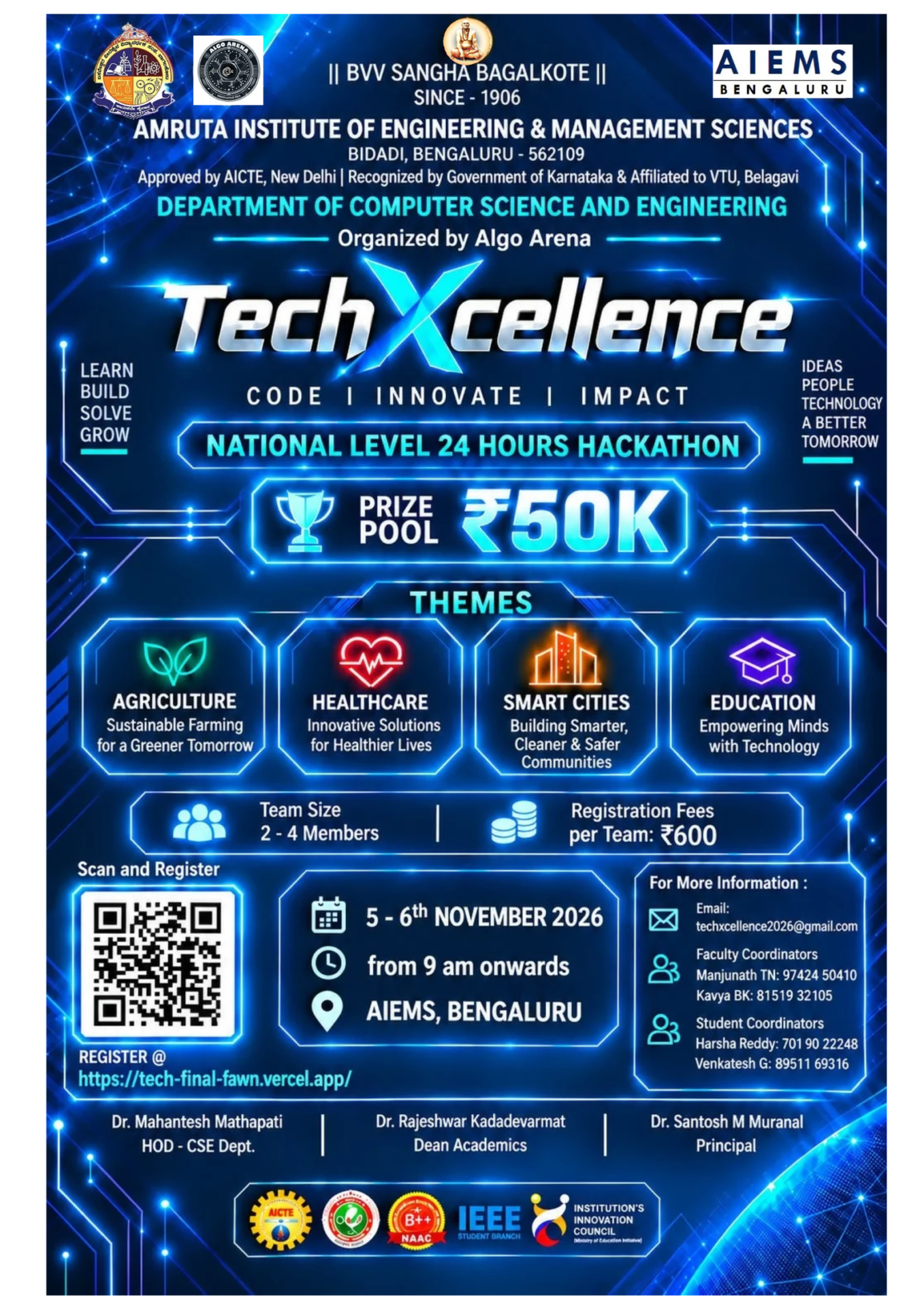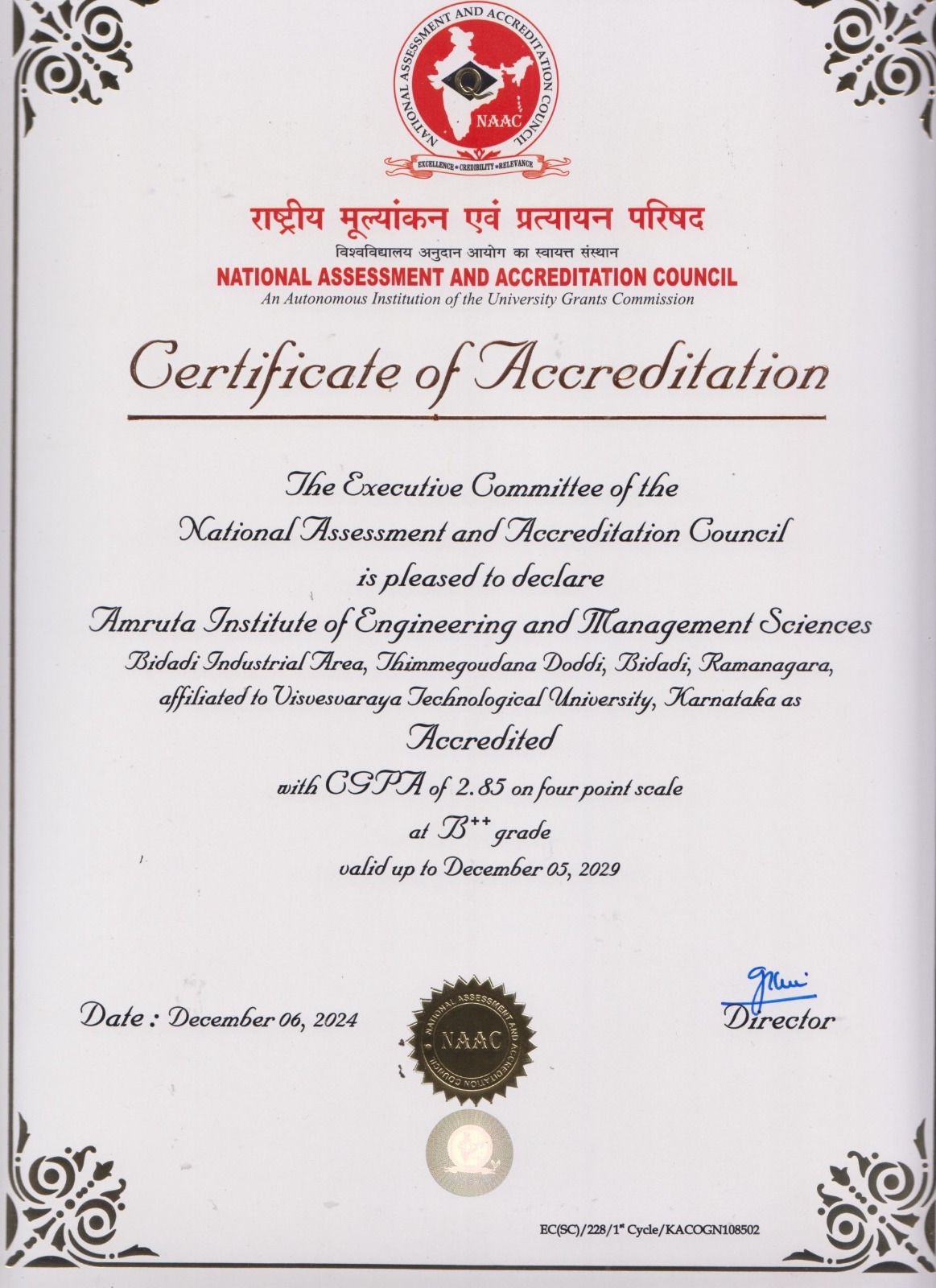
 Towering presence in Academics: Over 160 academic institutions comprising of Engineering, Management, Medical, Dental, Ayurveda, Paramedical, Pharmacy, Law, Teacher Training, Linguistic Studies, Arts, Science, Commerce, Pre University College
 Towering presence in Academics: Over 160 academic institutions comprising of Engineering, Management, Medical, Dental, Ayurveda, Paramedical, Pharmacy, Law, Teacher Training, Linguistic Studies, Arts, Science, Commerce, Pre University College
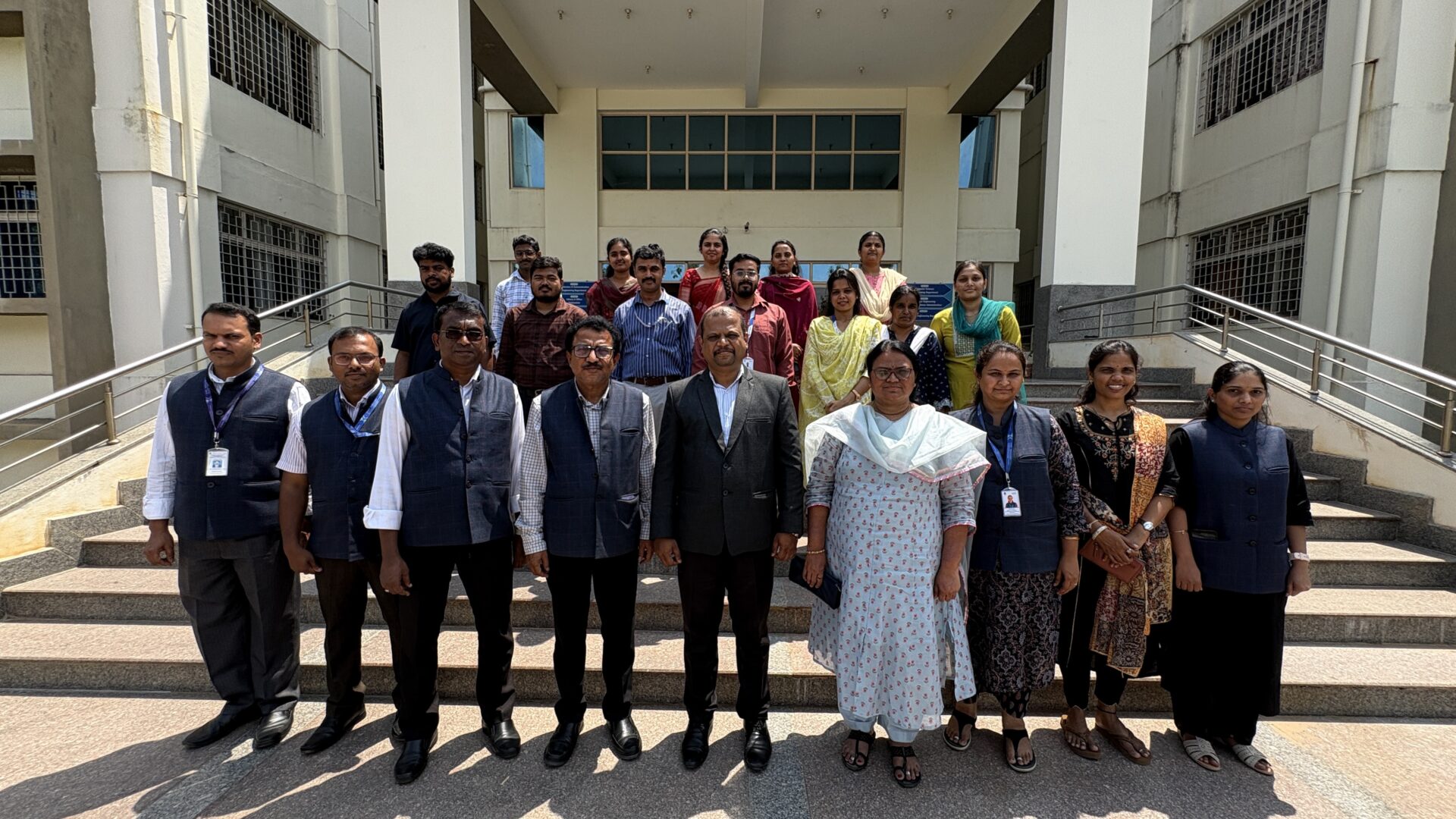
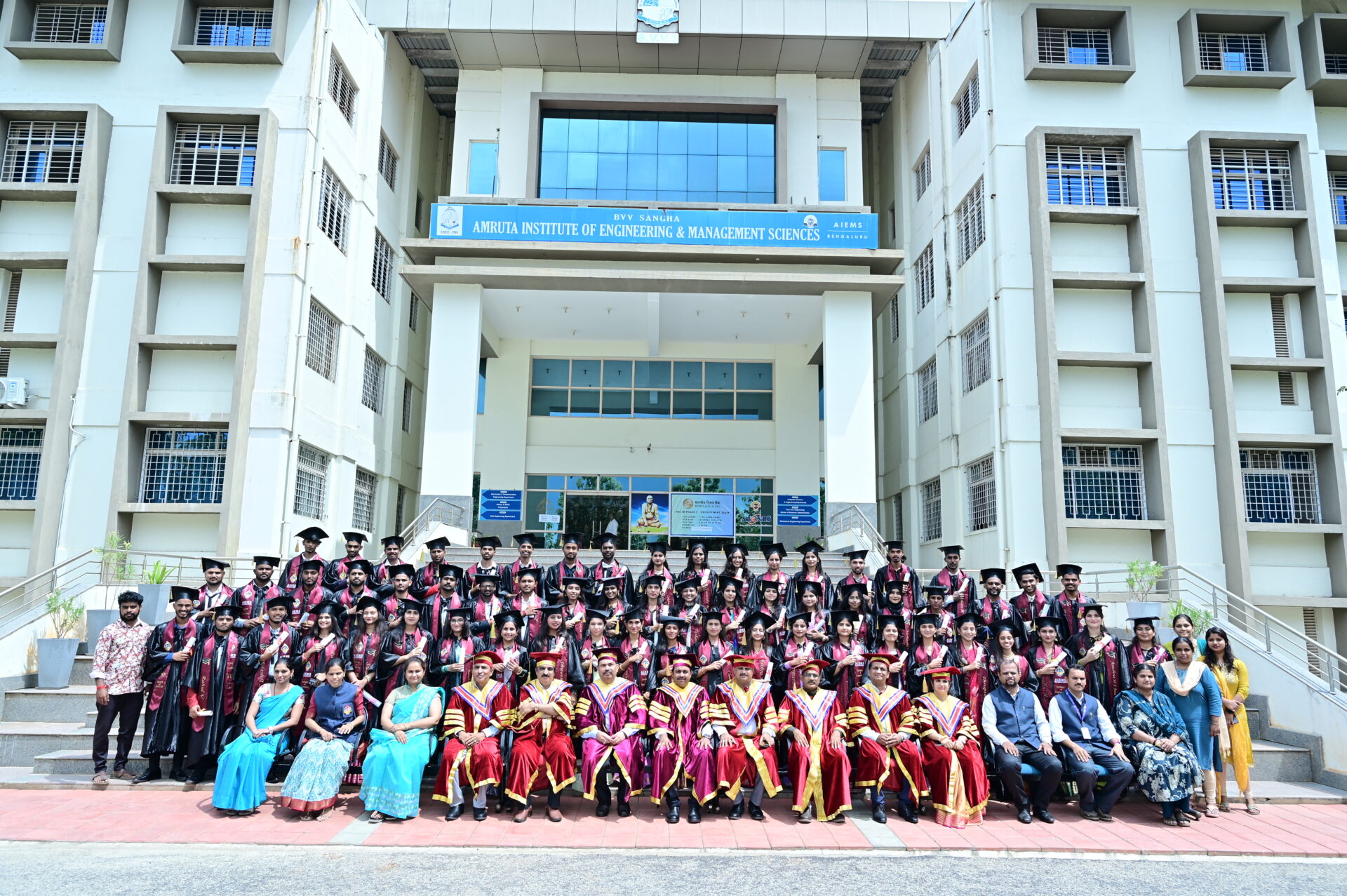
Department of Computer Science and Engineering was established in the year 2008. The department is having a team of young and dynamic teaching faculty with rich experience at various reputed engineering colleges.
All the faculties are specialized in their respective subjects and dedicated to the work. The department is having well established lab with programmers and supporting staff in each lab. All the labs are well equipped with latest configured systems with Wi-Fi connectivity.
The department is not only concerned about academics of students but also motivates and encourages the students to participate in all events organized at college/university level competitions in and out of Bangalore. The department provides an opportunity/platform for the students who can execute his/her hidden talents. The department plays an active role to produce good citizens to our nation with Computer Science and engineering degree.
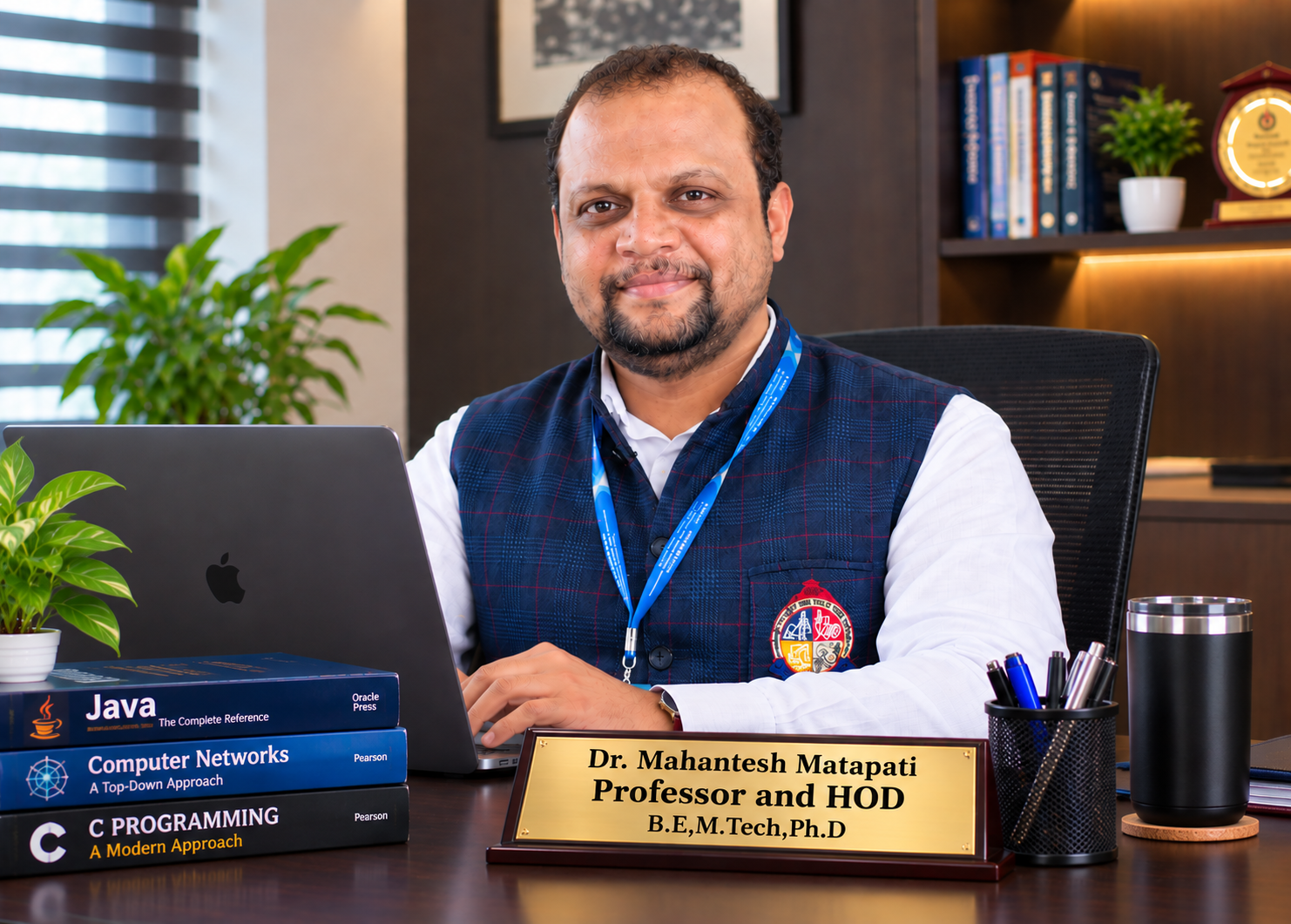
The department offers BE in Computer Science and Engineering with an intake of 120. The department endeavors to produce confident professionals tuned to real time working environment. The department offers excellent academic environment with a team of highly qualified faculty members to inspire the students to develop their technical skills and inculcate the spirit of team work in them.
Our goal includes a commitment to prepare students for professional and research activities with the ability to learn independently and work within a diverse, focus on overall development. The Department strongly encourage effective collaboration between academia and industry to shape a working symbiotic relationship. Our faculty and students are constantly striving to upskill, excel, and advance the state of the art in Computing Technology. The students of the department get placed in premier Indian and multinational IT companies and go on to attain prestigious positions.
I wish all the students and faculty a long and successful career path.
To prepare a professionally competent computer science engineers to serve software and allied
industries addressing socio-economic challenges.
1. Provide outcome-based quality education: To deliver a curriculum that builds strong
fundamentals, practical skills, and industry-relevant competencies in computing.
2. Promote research and collaboration: To Strengthen R&D, Centres of Excellence and
partnerships with industry and academia to encourage faculty-student research and
innovation.
3. Foster entrepreneurship and social responsibility: To facilitate entrepreneurship
culture & ethical values among student and staff to meet socio-economic challenges
1. Technical Competence: Graduates will analyse, design, develop, deploy and maintain
computing solutions for contemporary problems.
2. Leadership Role: Graduates will actively embrace leadership roles and strive hard to
achieve professional and organizational goals with adherence to professional and
ethical values.
3. Professional and Societal Development: Graduates will exhibit and adopt the lifelong
learning skill to meet the demand driven technologies.
Graduates will be able to
PSO 1: Develop software & hardware systems using software engineering principles and core
coding competencies.
PSO 2: Apply appreciable knowledge of Cloud Computing and computer networks, Cyber
Security to develop reliable IT solutions.
PSO 3: Exhibit proficiency in Artificial Intelligence and Big Data Analytics for providing
solutions to real world problems in Industry and Research establishments.
|
POs |
Description |
|
PO1 |
Engineering knowledge: Apply the knowledge of mathematics, science, engineering fundamentals, and computer science and business systems to the solution of complex engineering and societal problems. |
|
PO2 |
Problem analysis: Identify, formulate, review research literature, and analyze complex engineering and business problems reaching substantiated conclusions using first principles of mathematics, natural sciences, and engineering sciences. |
|
PO3 |
Design/development of solutions: Design solutions for complex engineering problems and design system components or processes that meet the specified needs with appropriate consideration for the public health and safety, and the cultural, societal, and environmental considerations. |
|
PO4 |
Conduct investigations of complex problems: Use research-based knowledge and research methods including design of experiments, analysis and interpretation of data, and synthesis of the information to provide valid conclusions. |
|
PO5 |
Modern tool usage: Create, select, and apply appropriate techniques, resources, and modern engineering and IT tools including prediction and modeling to complex engineering activities with an understanding of the limitations |
|
PO6 |
The engineer and society: Apply reasoning informed by the contextual knowledge to assess societal, health, safety, legal and cultural issues and the consequent responsibilities relevant to the professional engineering and business practices. |
|
PO7 |
Environment and sustainability: Understand the impact of the professional engineering solutions in business societal and environmental contexts, and demonstrate the knowledge of, and need for sustainable development. |
|
PO8 |
Ethics: Apply ethical principles and commit to professional ethics and responsibilities and norms of the engineering and business practices. |
|
PO9 |
Individual and team work: Function effectively as an individual, and as a member or leader in diverse teams, and in multidisciplinary settings. |
|
PO10 |
Communication: Communicate effectively on complex engineering activities with the engineering community and with society at large, such as, being able to comprehend and write effective reports and design documentation, make effective presentations, and give and receive clear instructions. |
|
PO11 |
Project management and finance: Demonstrate knowledge and understanding of the engineering, business and management principles and apply these to one’s own work, as a member and leader in a team, to manage projects and in multidisciplinary environments. |
|
PO12 |
Life-long learning: Recognize the need for, and have the preparation and ability to engage in independent and life-long learning in the broadest context of technological change. |