


Whoa! I opened Rabby on a whim one restless night. It felt different right away. The interface was cleaner than I expected, and the permission prompts actually made sense. My instinct said: this could save me time and headaches when I’m hopping between DeFi sites. Initially I thought browser wallets were all the same, but then realized the small workflow tweaks matter a lot for safety and speed.
Okay, so check this out—Rabby is a browser extension that treats dApp permissioning like a first-class citizen. Really? Yes. It gives you granular control over allowances and lets you manage approvals without endlessly hunting through tx history. And if you use many dApps, somethin’ about that relief is almost addictive. On one hand convenience wins, though actually the security defaults are surprisingly good.
Here’s the thing. I’m biased, but I care more about reducing attack surface than flexing features. Seriously?, you ask. Hmm… I used Rabby with Ledger and Trezor for a few months. Initially I thought it would add friction, but it streamlined my signing flow more than MetaMask did for hardware wallets—especially when switching networks for L2s. The switching isn’t perfect, yet it’s stable enough for daily trades and yield farming.
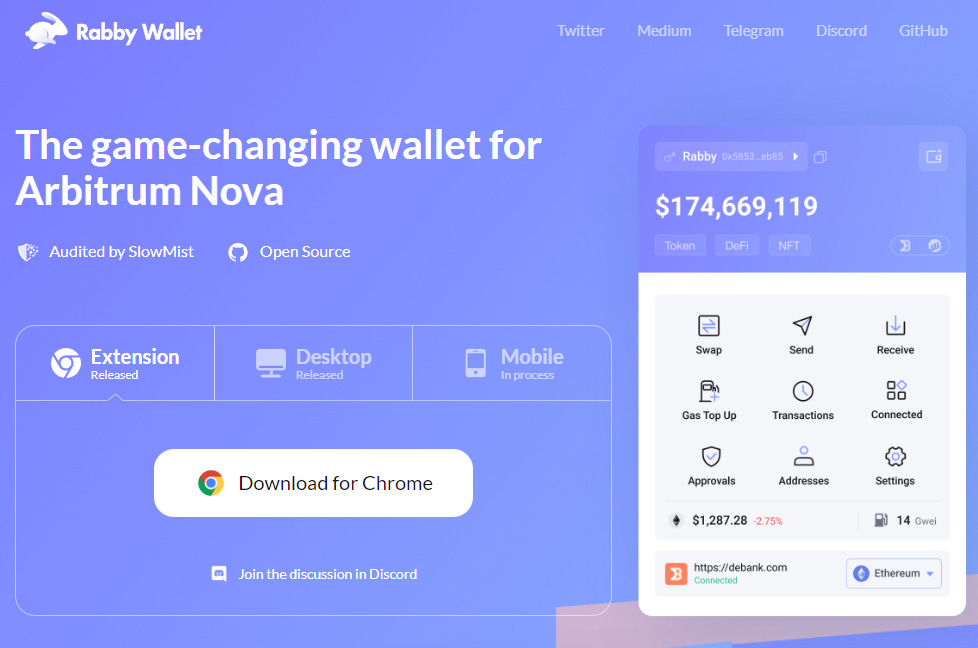
Try it if you want fewer surprises — download link below
If you want to install a browser wallet that’s focused on safer dApp interactions, check this out: https://sites.google.com/cryptowalletextensionus.com/rabby-wallet-download/. It’s a single, straightforward place to grab the extension (oh, and by the way, always verify the site address before downloading). The install is quick. After that you’ll see transaction previews and allowance controls that actually help.
One obvious win is approval management. Wow! Instead of blindly approving ERC-20 spending forever, Rabby surfaces the allowances and makes it easy to revoke. Two things happen then: you reduce long-term risk, and you feel smarter about each approval. The UI nudges you to use “Approve once” or a reasonable allowance, which sounds small, but it cuts exposure to token-draining exploits. This part bugs me when other wallets ignore it.
Gas handling deserves a mention. Really. Rabby shows gas in a clear way and supports custom RPCs and L2s so you can avoid getting stuck. My experience switching between Ethereum mainnet and Optimism was smooth, though sometimes network labels feel cluttered. Initially I thought gas estimation would be flaky, but the recent updates improved it—particularly during congestion spikes when wallets often lie about confirmation times.
Let’s talk phishing and site safety. There’s a built-in warning layer that flags known malicious domains. Hmm… I’ve clicked dodgy links before (don’t judge), and Rabby stopped me cold. On one hand no tool is perfect, though on the other hand this kind of proactive blocking is very very important for anyone who interacts with DeFi regularly. It’s not foolproof, but it lowers the chance you accidentally sign a dangerous tx.
Privacy and account separation are handled neatly. Short sentence. You can create multiple profiles and assign them to tasks—like a “gas” account, a “trading” account, and a cold-account linked to a hardware wallet. That practice saves headaches when you want to isolate funds. In practice I put dust and low-value tokens on a hot account, and keep the heavy assets behind my Ledger. That setup helps me sleep better at night.
On usability: the UX is approachable for folks coming from MetaMask, yet it adds sensible extras for power users. Really? Yup. There are transaction simulation features and a clearer breakdown of calldata that help when interacting with complex contracts. At first the extra info felt overwhelming, but then I learned to skim it—which is better than signing blind. The learning curve is gentle, though you’ll still want to double-check approvals until it becomes muscle memory.
Wallet integrations: Rabby plays nice with hardware wallets and supports multiple accounts per device. Whoa! That’s handy in a team setting or if you manage separate portfolios. When I connected a Ledger, the signing prompts were clearer and required fewer steps than other extensions I tried. I did run into a rare glitch where the hardware prompt lagged—minor, but it happened. Overall, the integration is solid.
For builders and power traders there’s contract interaction clarity. The transaction preview shows the method name and parameters for many common contracts. Initially I thought that would be just marketing fluff, but it proved useful when I was interacting with new pools and vaults. On one hand the preview parsed familiar functions well; though actually it struggled with obscure custom ABIs sometimes. Still, it’s a significant improvement over a raw hex calldata string.
Cost-wise, Rabby itself is free and open-source (to my knowledge). You still pay gas, obviously. This wallet is optimized to reduce accidental overspending on approvals and to help you spot sketchy RPC warnings. I’m not 100% sure about every OSS dependency, but the dev community around Rabby is active, which is reassuring. I read issue threads and patched my own paranoia with community threads—that’s something I do.
What about mobile? Short answer: Rabby is primarily a browser extension. If you need full mobile UX, you might pair it with a mobile wallet that supports WalletConnect. For desktop-first DeFi work, though, Rabby is a very practical choice. Many US traders and folks in the Bay Area desks I know prefer desktop extensions for active strategy work. YMMV.
FAQ
Is Rabby safer than MetaMask?
It depends. Rabby focuses on permission granularity and clearer transaction previews, which reduces common user mistakes. On the flip side, MetaMask has wider adoption and slightly different guardrails. I’m biased toward tools that force you to think before signing, so I prefer Rabby for DeFi-heavy workflows.
Can I use my Ledger with Rabby?
Yes. Rabby supports hardware wallets and generally provides a smoother flow for signing than some other extensions. Expect occasional hiccups depending on firmware or browser updates, but overall the experience is solid.
Does Rabby support Layer 2 networks?
Absolutely. It supports multiple L2s and custom RPCs, which is handy when you’re moving between Optimism, Arbitrum, zkSync, and others. The network switching is faster than I expected, yet keep an eye on custom RPC reliability.